

The Best Chilled Red Wines to Stock This Summer
Light, low-tannin reds like Gamay, Pinot Noir, Cinsault, Grenache, Frappato, Zweigelt, Valpolicella, and Lambrusco are the ones built for the fridge. Serve them at cool temperatures, with most chillable reds enjoyed at a moderate chill that enhances fruit and reduces alcohol perception, and fresher “glou-glou” styles served colder for best effect. A 20 to 60 minute stint in the refrigerator gets most bottles there. Skip the freezer shortcuts on anything with real tannin or age on it.
TL;DR:
- Wines like Gamay, Pinot Noir, Cinsault, and Lambrusco with naturally low tannin and bright acidity are the best candidates for chilling without turning bitter.
- Temperature ranges for chillable reds are ideal between 45 and 55°F, with most home refrigerators typically requiring 20 to 30 minutes to reach these levels.
- Using quick methods like ice buckets, damp towels, or frozen grapes can chill wine effectively without compromising its aromatics or complexity.
- Chillable reds pair well with foods like charcuterie, spicy dishes, grilled vegetables, and seafood, especially in casual or outdoor settings.
- Avoid chilling high-tannin or oak-aged reds, such as heavy Cabernets, as cold temperature will make tannins bitter and close the wine off.
Table of Contents
- Which Red Wines Are Chillable, and How to Spot Them
- What Temperature Should Chilled Red Wine Be?
- Fast Ways to Chill Red Wine Without Ruining It
- Best Food Pairings for Chilled Red Wine
- Bottle Grove Picks for Summer Chilling
- Why Chilled Reds Deserve a Permanent Spot in Your Rotation
- Sources
Which Red Wines Are Chillable, and How to Spot Them
Not every red survives a cold glass. A heavy, oak-aged Cabernet turns bitter and closed when it’s cold because chilling tightens tannin structure that’s already assertive at room temperature. The reds that thrive chilled share the opposite traits: naturally low tannin, bright acidity, and fruit that stays forward rather than buried under wood or extraction.
Gamay, the grape behind Beaujolais, is the poster child for chillable reds and about as forgiving as red wine gets, with cherry and cranberry notes that get more vivid when cold. Pinot Noir, especially from cooler climates, has enough acid and so little tannin that a light chill just sharpens its raspberry and earth character. Cinsault, often blended in Provençal rosé but increasingly bottled solo, drinks almost like a cold rosé with more depth. Grenache brings juicy red fruit and soft tannin. Frappato, a Sicilian variety, is one of the lightest, most floral reds you’ll find. Zweigelt from Austria offers tart cherry with a peppery edge. Valpolicella (the basic, non-Ripasso style) and Lambrusco, which is often lightly sparkling, round out the list as easy, food-friendly options.
Winemaking technique tells you almost as much as the grape does. Carbonic maceration, the fermentation method behind most nouveau-style wines, produces intensely fruity, low-tannin wines built for early drinking and cold service. Look for these signals on a shelf or a wine list:
- Words like “nouveau,” “early release,” or “fresh” on the label
- Pale, almost rosé-like color in the glass
- Little to no mention of oak aging
- Lower alcohol, often 11.5% to 13%
- Screwcap or lighter glass, which often signals a wine meant for casual, quick drinking rather than the cellar
None of this is a hard rule, but these cues reliably point shoppers toward chillable bottles when there’s no staff pick sign or sommelier around to ask.
What Temperature Should Chilled Red Wine Be?
Temperature does more than make a wine cold. It changes how the wine tastes. It also tightens tannin and can dull aromatics if you overdo it, so there’s a real ceiling on how cold is too cold.
The temperature ranges that actually work:
- 40–45°F: nouveau, glou-glou, and other ultra-light, low-tannin styles
- 45–50°F: very light reds like Frappato or Lambrusco
- 50–55°F: most chillable reds, including Gamay, Pinot Noir, and Cinsault
- 55°F: a reasonable cellar-style baseline if you’re unsure
Most home refrigerators run around 37°F, which is colder than any of these targets. A quick way to think about it: room temperature in most American homes runs warmer than a proper wine cellar, so even a modest chill is usually correcting for that gap rather than creating an unnatural state.
Twenty to thirty minutes in the fridge handles most light reds. A denser, fuller-bodied red benefits from closer to an hour. If you go overboard and the wine tastes sharp or closed off, don’t panic. Cup the glass in your hand or let it sit on the counter for five to ten minutes. The wine warms fast, and the fruit opens back up.
Fast Ways to Chill Red Wine Without Ruining It
You don’t need to plan ahead to drink a properly chilled red. A few reliable methods get you there in the time it takes to set the table.
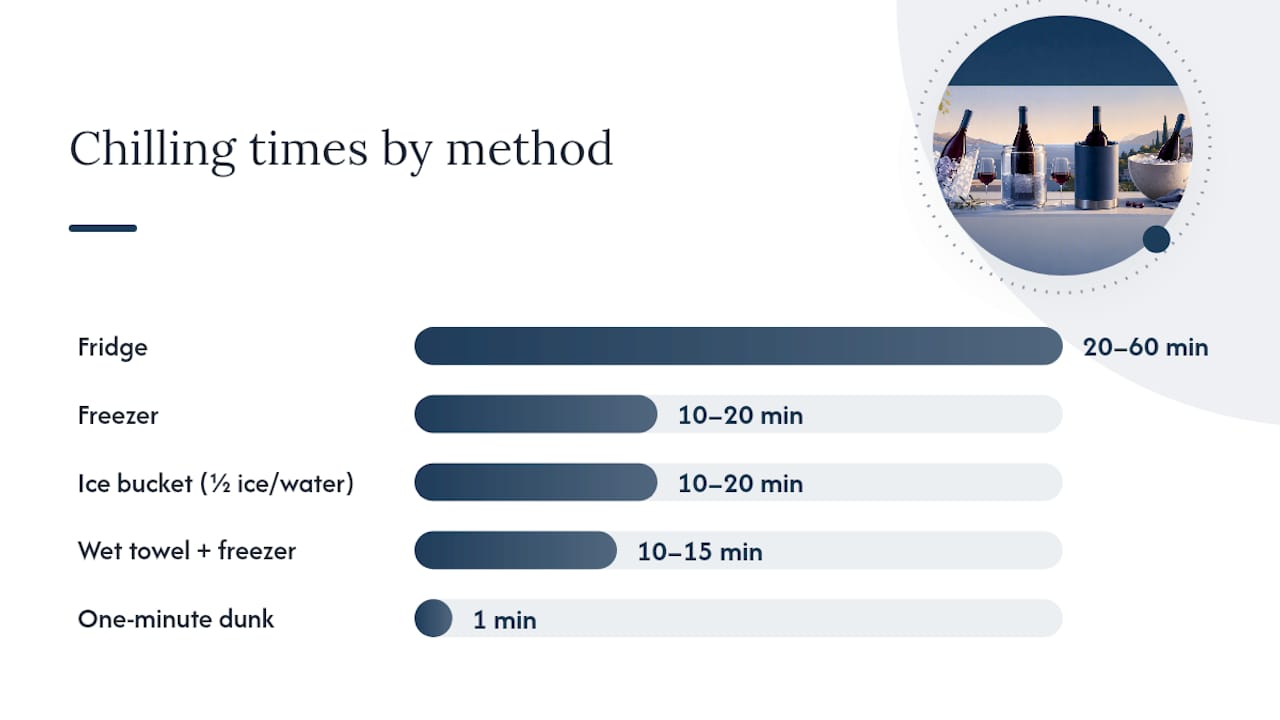
- Fridge, 20 to 60 minutes. Start the timer the moment the bottle goes in; a bottle starting at room temperature needs the full hour, one already cool needs less.
- Freezer, 10 to 20 minutes, with a timer set. This works in a pinch, but forgetting a bottle in the freezer for even 30 extra minutes can crack the glass or blow the cork.
- Ice bucket, half water and half ice, 10 to 20 minutes. Add a handful of salt to the ice and the bottle chills noticeably faster, the same trick bartenders use for chilling glasses quickly.
- Wet paper towel plus freezer, 10 to 15 minutes. Wrap the bottle in a damp towel before it goes in; the evaporating water pulls heat out faster than dry glass alone.
- Frozen grapes in the glass. Drop a few in as ice cubes that won’t water down the pour, a neat trick for a single glass rather than a full bottle.
Pro Tip: If you’re chilling in a hurry, dunk the bottle in ice water for exactly one minute, pull it out, and pour. It won’t hit your ideal target temperature, but it takes the edge off fast enough for a backyard gathering, and you can always follow up with a proper ice bucket at the table.
One caution: reach for short fridge or ice-bucket windows rather than overnight storage if the bottle has any age or complexity worth preserving. Extended cold storage flattens aromatics you paid for.
Best Food Pairings for Chilled Red Wine
Chilled reds earn their keep at the table because their acidity and lighter tannin do things a big, warm red can’t. Acid cuts through fat the way a squeeze of lemon does, fruit-forward character stands up to spice instead of fighting it, and soft tannins avoid clashing with the acidity in tomato-based sauces.
That makes chilled reds a natural fit for:
- Charcuterie boards and cured meats
- Grilled vegetables and corn
- Picnic sandwiches, especially anything with pickles or vinaigrette
- Spicy Thai or Indian dishes, where the fruit tempers the heat
- Margherita pizza
- Grilled salmon or tuna
- Burgers, particularly ones with a tangy sauce
Think backyard barbecues, patio dinners, beach coolers, and casual dinner parties where nobody wants to fuss over decanting. A chilled Gamay or Frappato does more work at a picnic table than most whites manage, largely because it can handle both the protein and the condiments on the same plate.
Bottle Grove Picks for Summer Chilling
You don’t have to guess your way through this. A few bottles in Bottle Grove’s catalog line up well with everything above, and each one gives you a different way to serve chilled red this season.
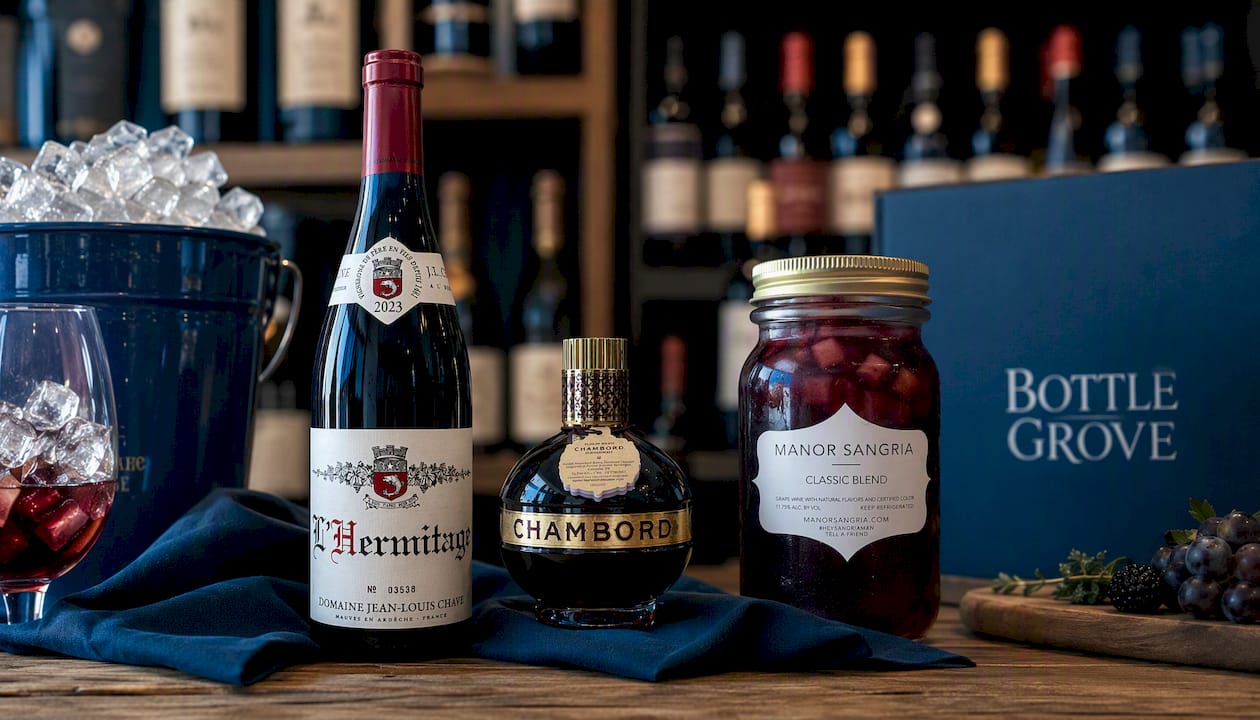
The Chave Hermitage Rouge 2023 is a fuller-bodied Rhône red, so it’s not one to dunk in ice water, but a light 15 to 20 minute chill to around 60°F softens its structure just enough for warm-weather drinking without losing what makes it interesting. Serve it with grilled lamb or a hearty vegetable spread.
The Chambord 375ml is the easiest single-serving option on this list. Its half-bottle format means you can chill it fully in 20 minutes and finish it in one sitting, ideal for solo patio evenings or splitting between two glasses without committing to a full 750ml.
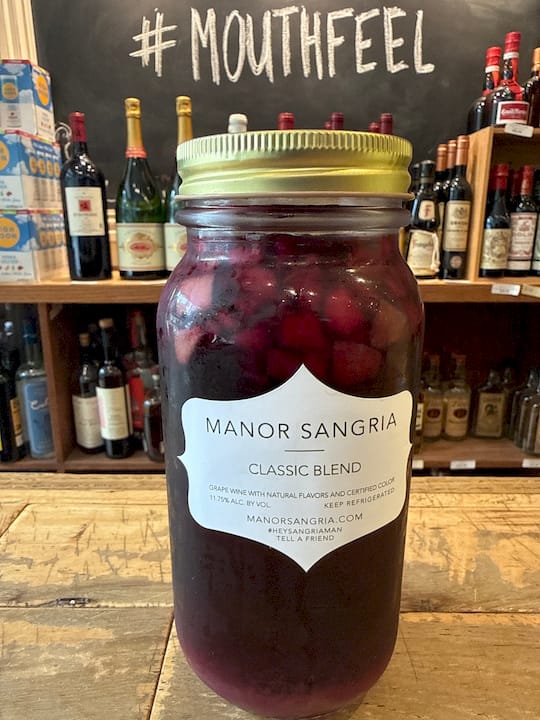
The Manor Sangria Classic Blend is already built for cold service. Pour it over ice, or chill the bottle first for 30 to 45 minutes, and it’s ready for a crowd at a cookout or beach trip with zero decision fatigue involved.
Check Bottle Grove’s staff picks and monthly wine club selections for more chillable reds as they rotate through, along with lighter examples like the Bacchus Pinot Noir Ginger’s Cuvee for a textbook chillable Pinot.
Why Chilled Reds Deserve a Permanent Spot in Your Rotation
Brian, Bottle Grove’s wine writer, has watched chilled reds move from a niche sommelier trick to a mainstream summer habit. That shift tracks with what restaurants and bars across the country are reporting: younger drinkers, in particular, are driving demand for lighter, colder reds that used to get dismissed as a warm-weather compromise.
The bigger mistake isn’t chilling red wine. It’s chilling the wrong red wine, or chilling the right one into the ground. Bottle Grove’s staff picks exist precisely to steer customers toward bottles built for this, not away from the ones that aren’t.
— Brian
Sources
- A guide to chillable red wine — Wine Enthusiast
- Why you should chill your red wines — Food & Wine
- Why Gen Z chilling red wine is socially acceptable, especially in the summer heat — BBC